
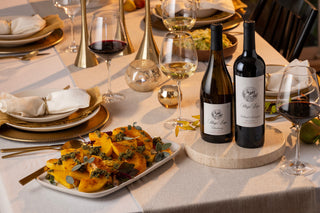
Pair with Stags’ Leap Winery Napa Valley Cabernet Sauvignon or Napa Valley Chardonnay
At a Glance
- Best for: Fall dinners, Thanksgiving, and holiday entertaining
- Main ingredient: Butternut squash
- Flavor profile: Sweet, nutty, savory, and herbaceous
- Cooking method: Oven-roasted at 425°F
- Cook time: Approximately 15 to 20 minutes
- Wine pairing: Napa Valley Cabernet Sauvignon or Napa Valley Chardonnay
What Wine Goes with Roasted Butternut Squash?
Butternut squash has a natural sweetness and buttery texture that can pair beautifully with both red and white wine. Sage, Parmesan, garlic, and nuts add savory depth, creating enough complexity to complement Cabernet Sauvignon while still pairing naturally with Chardonnay.
For a red wine pairing, serve this dish with our 2022 Napa Valley Cabernet Sauvignon. Dark fruit and structure complement the sweetness of the roasted squash and the savory character of the sage pesto.
For a white wine pairing, try our 2024 Napa Valley Chardonnay. Its freshness provides a beautiful counterpoint to the richness of the squash, Parmesan, nuts, and olive oil.
Which Wine Should You Choose?
Napa Valley Cabernet Sauvignon
Choose Cabernet Sauvignon for a richer, more savory pairing. Its dark fruit and structure complement the sweet roasted squash and earthy sage.
Napa Valley Chardonnay
Choose Chardonnay for a brighter pairing. Its freshness balances the buttery squash and richness of the sage pesto.
Ingredients
Roasted Butternut Squash
- 1 large butternut squash, seeded, peeled, and sliced into rings or wedges
- Olive oil
- Salt
- Freshly ground black pepper
Sage Pesto
- 2 cups fresh sage leaves
- ⅔ cup pistachios, walnuts, pine nuts, or hazelnuts
- 2 to 3 cloves garlic, peeled
- ½ cup grated Parmesan
- 1 tablespoon lemon juice
- ¾ to 1 cup olive oil
- Salt
- Freshly ground black pepper
How to Make Roasted Butternut Squash with Sage Pesto
1. Roast the Squash
Preheat the oven to 425°F.
Arrange the butternut squash on two parchment-lined sheet pans. Brush with olive oil and season with salt and freshly ground black pepper.
Roast for 15 to 20 minutes, rotating the pans halfway through cooking, until the squash is tender and golden brown.
2. Make the Sage Pesto
While the squash roasts, combine the sage, nuts, garlic, Parmesan, lemon juice, and olive oil in a food processor.
Pulse until the pesto reaches your desired texture. Taste and season with salt and freshly ground black pepper. For a thinner pesto, gradually add additional olive oil.
3. Assemble and Serve
Arrange the warm roasted squash on a serving platter. Spoon the sage pesto over the squash just before serving, or serve it alongside the dish so guests can add their preferred amount.
Complete the pairing with a glass of Napa Valley Cabernet Sauvignon or Chardonnay.
Why Sage and Butternut Squash Work Together
Butternut squash becomes sweeter and more concentrated as it roasts. Sage brings an earthy, savory character that creates contrast, while Parmesan and nuts add richness and texture.
Lemon juice brings brightness to the sage pesto, balancing its richer ingredients and creating a fresh counterpoint to the roasted squash.
The result is a fall side dish with enough depth for a holiday table, yet simple enough for a relaxed seasonal dinner.
Tips for the Best Roasted Butternut Squash
- Give the squash room to roast. Spreading it across two sheet pans encourages browning rather than steaming.
- Cut evenly. Consistent slices help the squash cook at the same rate.
- Adjust the pesto to taste. Add more olive oil for a looser consistency or keep it thicker for more concentrated flavor.
- Experiment with the nuts. Pistachios, walnuts, pine nuts, and hazelnuts each bring a slightly different character.
- Serve while warm. The combination of warm roasted squash and fresh sage pesto offers the best flavor and texture.
Frequently Asked Questions
What wine pairs best with butternut squash?
Both Chardonnay and Cabernet Sauvignon can pair beautifully with roasted butternut squash. Chardonnay offers freshness and richness, while Cabernet Sauvignon creates a deeper pairing with the sweet, roasted character of the squash. For this recipe, we recommend Stags’ Leap Winery Napa Valley Chardonnay or Napa Valley Cabernet Sauvignon.
Can you pair Cabernet Sauvignon with butternut squash?
Yes. Cabernet Sauvignon works particularly well when butternut squash is paired with savory ingredients such as sage, garlic, Parmesan, and toasted nuts. These ingredients add enough depth to complement a structured red wine.
What does sage pesto taste like?
Sage pesto is earthy, herbaceous, nutty, and savory. Parmesan and nuts add richness, lemon juice contributes brightness, and olive oil brings the ingredients together.
Can I substitute another nut in sage pesto?
Yes. This recipe works with pistachios, walnuts, pine nuts, or hazelnuts. Each adds a slightly different flavor, so choose your favorite or what you have available.
How do you know when roasted butternut squash is done?
Butternut squash is ready when it is fork-tender and beginning to turn golden brown around the edges. For this recipe, that takes approximately 15 to 20 minutes in a 425°F oven.
Is roasted butternut squash a good Thanksgiving side dish?
Yes. Its naturally sweet and savory character works well alongside classic Thanksgiving dishes, while the sage pesto adds an elevated seasonal element.
Complete the Pairing
Whether you prefer the richness of Cabernet Sauvignon or the freshness of Chardonnay, the right wine brings another dimension to this seasonal dish.